
Motifs
Motifs are not just decorative shapes. They are visual stories passed from one generation to the next. Geometric motifs often speak through simple symbols of protection, nature, daily lifer identity, while curvilinear motifs tell more fluid stories or balance, growth, and harmony inspired by gardens, poetry, and spiritual ideals.

Hands on Hips
Elibelinde, from the Turkish
In the heart of the rug stands the “hands on hips,” called Elibelinde in Turkish. She holds quiet strength. Her triangular form is a timeless emblem of fertility, abundance, and motherhood.
Repeated across the field, she becomes a guardian of prosperity. She carries hopes and blessings from the loom to the home. Flowers may bloom at her feet. Stars may hover above. Yet she remains a steady presence, a woven prayer for growth, protection, and the warmth of family life.
Hands on Hips
Elibelinde, from the Turkish
In the heart of the rug stands the “hands on hips,” called Elibelinde in Turkish. She holds quiet strength. Her triangular form is a timeless emblem of fertility, abundance, and motherhood.
Repeated across the field, she becomes a guardian of prosperity. She carries hopes and blessings from the loom to the home. Flowers may bloom at her feet. Stars may hover above. Yet she remains a steady presence, a woven prayer for growth, protection, and the warmth of family life.

Peacock
In tribal rugs, the peacock appears as a radiant bird of paradise. Its long, colorful tail symbolizes immortality, nobility, and divine protection, carrying wishes for happiness, love, and good fortune, the weaver's hope for a life of beauty, abundance, and a generous spirit.
When shown double-facing, the two birds watch over the home, their gaze turning away evil. Facing outward, they stand as guardians, their striking presence bringing blessings and safety.
Peacock
In tribal rugs, the peacock appears as a radiant bird of paradise. Its long, colorful tail symbolizes immortality, nobility, and divine protection, carrying wishes for happiness, love, and good fortune, the weaver's hope for a life of beauty, abundance, and a generous spirit.
When shown double-facing, the two birds watch over the home, their gaze turning away evil. Facing outward, they stand as guardians, their striking presence bringing blessings and safety.

The Herd
animal motifs of the loom
Persian tribal weavers rarely wove an animal as it looked. They broke it into its truth, a triangle for a body, a hook for a horn, and repeated it across the field until the wool held a whole living world. Four of them travel together here, each carrying a wish for the household.
The gazelle leads, horns raised. Swift and watchful, it is an old sign of strength and honorable defense, the grace that guards as much as it flees.
The dog follows close, the loyal one. Guardian of the flock and the camp through the night, it stands for protection, faithfulness, and the safety of everything within its watch.
The pregnant sheep walks at the center, heavy with the season to come. Among people whose lives depended on their flocks, she was woven as a wish for abundance, fertility, and a household that grows.
The camel closes the line. For nomadic tribes it was a faithful companion, carrying families, goods, and hopes across long journeys. It came to stand for endurance, wealth, and security, the promise of a long road safely traveled.
Read together, they are a quiet blessing for the household: protected, provided for, and carried safely wherever the journey leads.
The Herd
animal motifs of the loom
Persian tribal weavers rarely wove an animal as it looked. They broke it into its truth, a triangle for a body, a hook for a horn, and repeated it across the field until the wool held a whole living world. Four of them travel together here, each carrying a wish for the household.
The gazelle leads, horns raised. Swift and watchful, it is an old sign of strength and honorable defense, the grace that guards as much as it flees.
The dog follows close, the loyal one. Guardian of the flock and the camp through the night, it stands for protection, faithfulness, and the safety of everything within its watch.
The pregnant sheep walks at the center, heavy with the season to come. Among people whose lives depended on their flocks, she was woven as a wish for abundance, fertility, and a household that grows.
The camel closes the line. For nomadic tribes it was a faithful companion, carrying families, goods, and hopes across long journeys. It came to stand for endurance, wealth, and security, the promise of a long road safely traveled.
Read together, they are a quiet blessing for the household: protected, provided for, and carried safely wherever the journey leads.
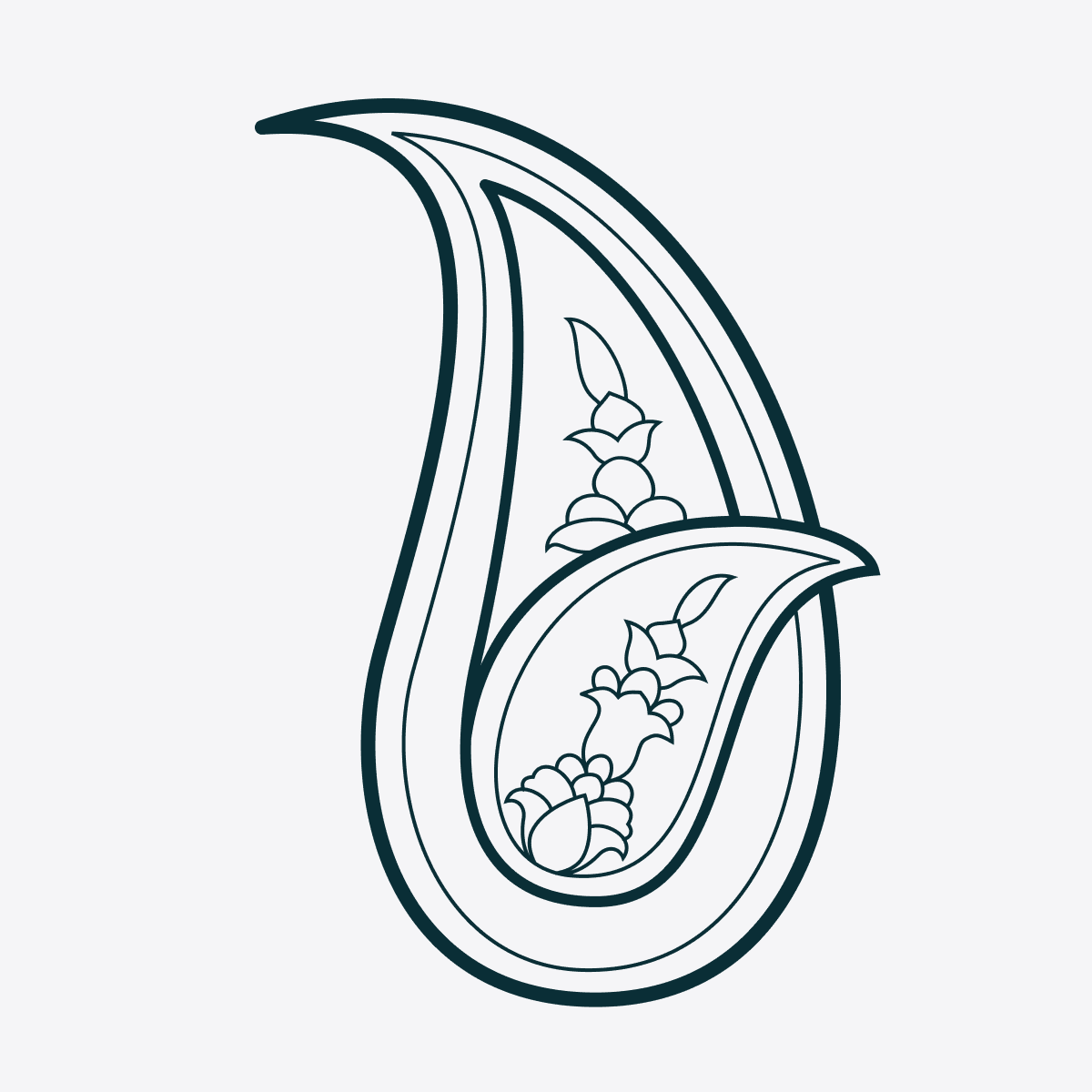
Boteh: Mother and Baby
One of the oldest and most beloved motifs in Persian weaving, the boteh is the curved, teardrop form the West later borrowed and called paisley. Its meaning has always been life: a seed, a sprig of cypress bent in the wind, a flame, a promise of growth.
Here it appears doubled. A small boteh curls inside a larger one, seed within shrub, child within mother, floral patterns blooming inside both shapes. The larger form curves to shelter the small, holding close what it protects.
Woven for centuries as a wish for new life and its safe keeping, this nested boteh is a quiet blessing for beginnings, for growth, and for everything a household hopes to carry safely forward.
Boteh: Mother and Baby
One of the oldest and most beloved motifs in Persian weaving, the boteh is the curved, teardrop form the West later borrowed and called paisley. Its meaning has always been life: a seed, a sprig of cypress bent in the wind, a flame, a promise of growth.
Here it appears doubled. A small boteh curls inside a larger one, seed within shrub, child within mother, floral patterns blooming inside both shapes. The larger form curves to shelter the small, holding close what it protects.
Woven for centuries as a wish for new life and its safe keeping, this nested boteh is a quiet blessing for beginnings, for growth, and for everything a household hopes to carry safely forward.
